Case study · A creative project
The Album of Lyla Carter
At an Independence Day party in Santiago, Chile, my partner’s family brought out their century-old album of handwritten poems and drawings. They all speak Spanish. I don’t. With Claude as reader, translator and research partner, I turned my photos of it into a bilingual book for the family, and found a promise inside the cover with a deadline still running.
A party in Santiago, and a book I couldn’t read
In September 2026 I spent a month in Chile, where my partner is from. At her family’s Independence Day party in Santiago, a relative brought out the family album to share: handwritten poems and notes, nearly a century old.
I don’t speak Spanish. Her entire family does. I couldn’t read a line of it, and I couldn’t put it down. The pages were loose, out of order and fading, so I photographed all thirty-seven, one at a time, to find out what they said.
Half story, half method
It took both halves of the brain. The right half, the creative one, found the story in thirty-seven loose pages and told it, down to a closing poem. The left half, process and analysis, built the method that kept that story honest.
It was also a project across two languages, and a heartfelt gesture to her family: their album, read with care and made into a book in their language and mine.
Rules for reading someone else’s life
AI is fluent, and old handwriting is ambiguous. It would have been easy to fill every gap with something plausible, so the rules came first.
- The photo stays beside the wordsEvery transcription sits next to its photograph, so anyone can check it.
- Mark every guessEach reading is marked confirmed, probable, uncertain or unknown.
- Credit the poetsCopied poems are traced to their authors, the way Lyla labelled them herself.
- Leave the gaps openWhat we can’t know stays a question, not a smoothed-over story.
One leaf at a time
- PhotographEvery page, shot by hand, one at a time.
- ReadClaude and I transcribed each leaf, described what’s physically on it, and marked how sure we were.
- TranslateEvery leaf into English, with the Spanish kept alongside.
- ResearchPoems traced to their authors, dates set against Chile’s history, and signatures compared to work out who wrote what.
- Write and buildThirteen chapters, an index of every leaf, and a bilingual reader designed around old handwriting.
What the pages gave up
Her name was hidden. Her friends only ever use nicknames. Then one hid her real name in five lines of verse, one letter per line, and it waited almost a hundred years to be noticed.
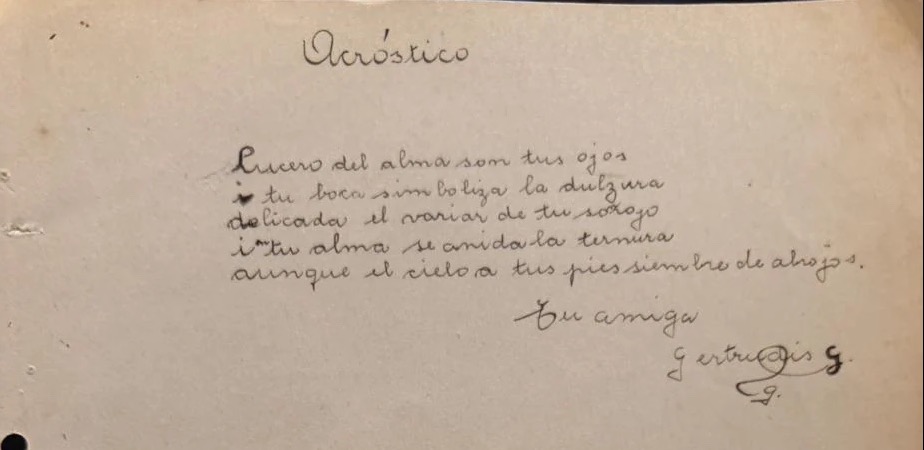
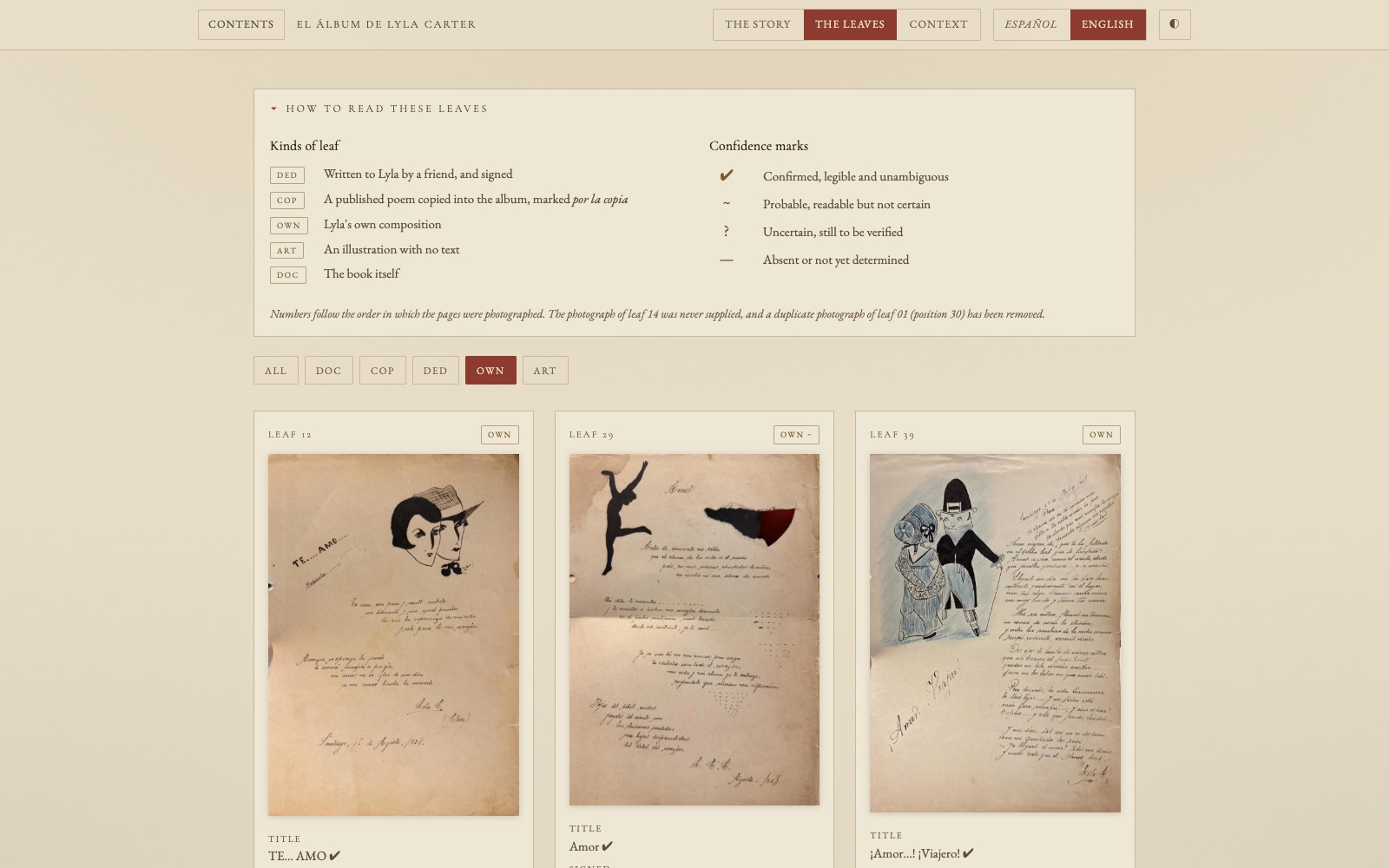
She was a poet, too. Lyla marked every poem she copied por la copia. Where that mark is missing and she signs anyway, the verse is hers: at least three poems, probably four.
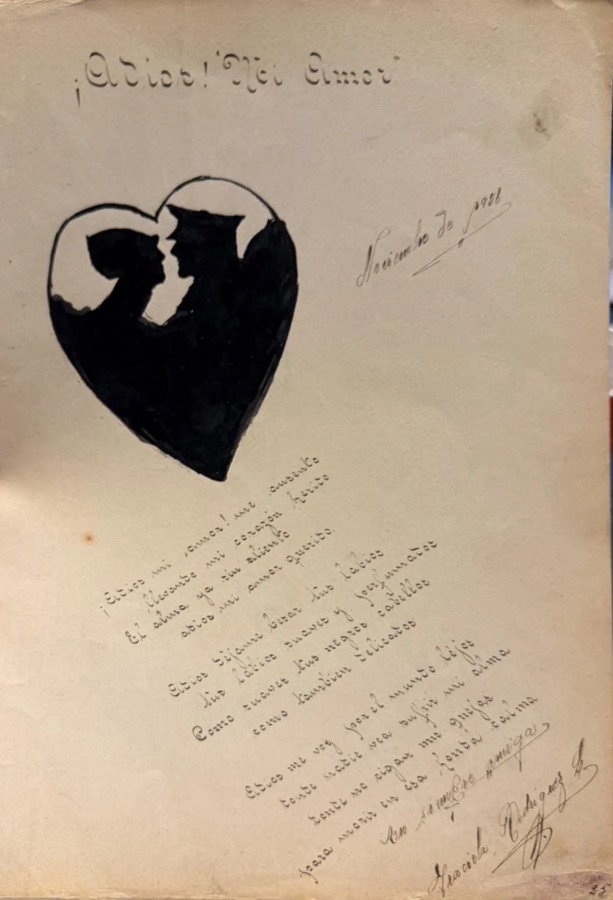
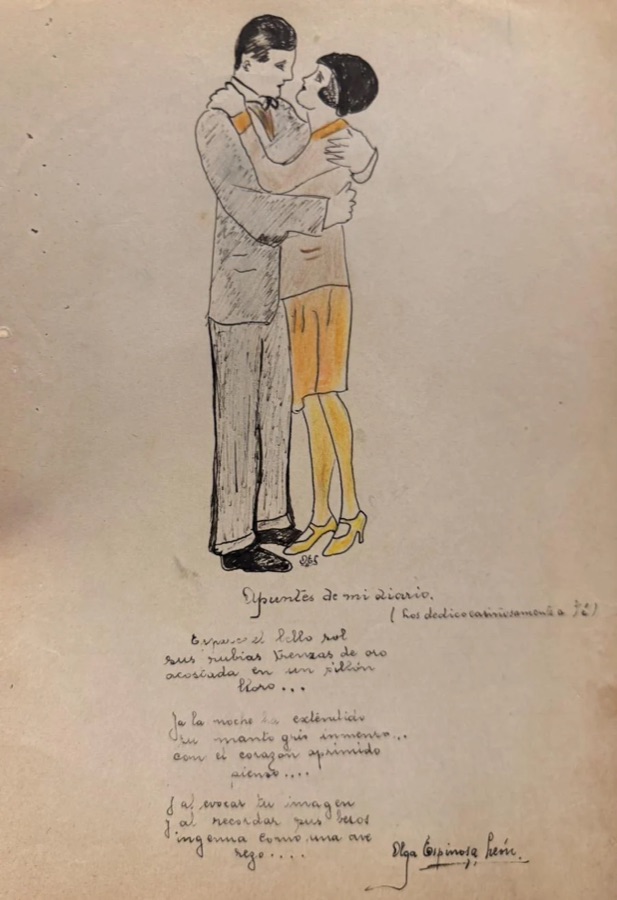
The handwriting told a love story. One admirer wrote seven leaves, always signed “your friend”, and named his rival in one. A monogram on the last three dated leaves echoes the rival’s signature: a strong case, not proof.
The dates told a history. More than half the dated pages fall in four months of 1928, most likely friends signing before they scattered. The album runs almost exactly the length of a dictatorship, through Chile’s Great Depression, and never mentions either.
A promise with a deadline
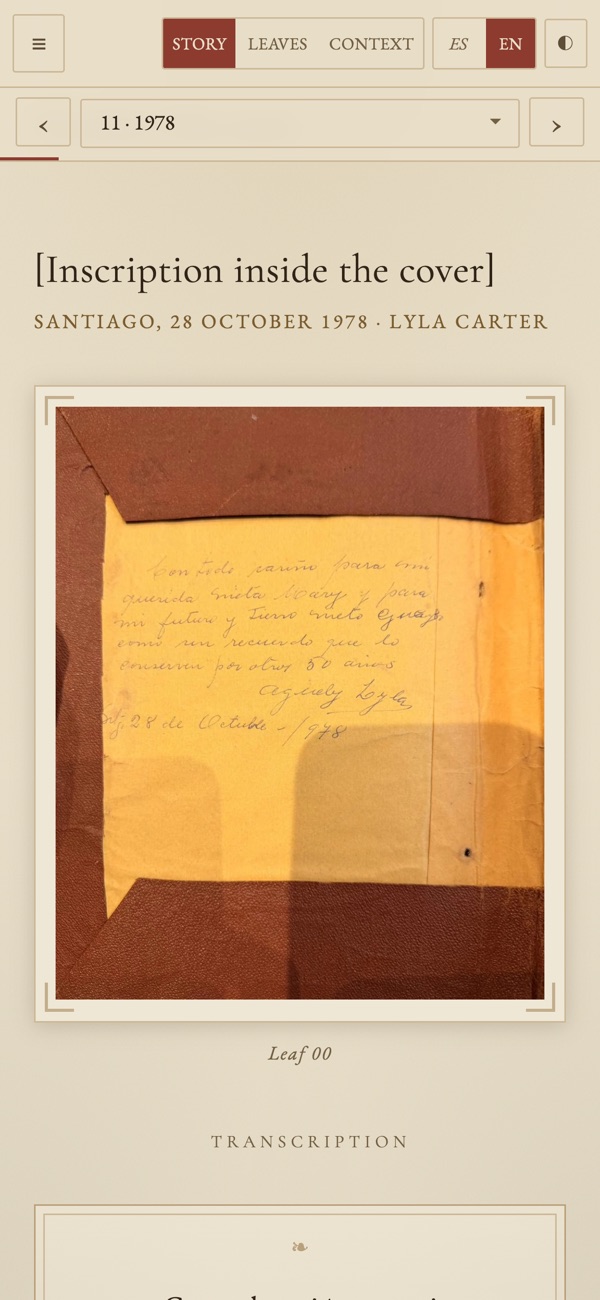
One of the last pages to be read changed everything. Inside the cover, in pencil, dated 28 October 1978, Lyla, now a grandmother, leaves the album to her granddaughter and a grandson not yet born, and asks them to keep it for another fifty years.
It proved that an elegy titled with her name wasn’t for her, and it set a deadline: 28 October 2028. The book was finished in September 2026, two years early.
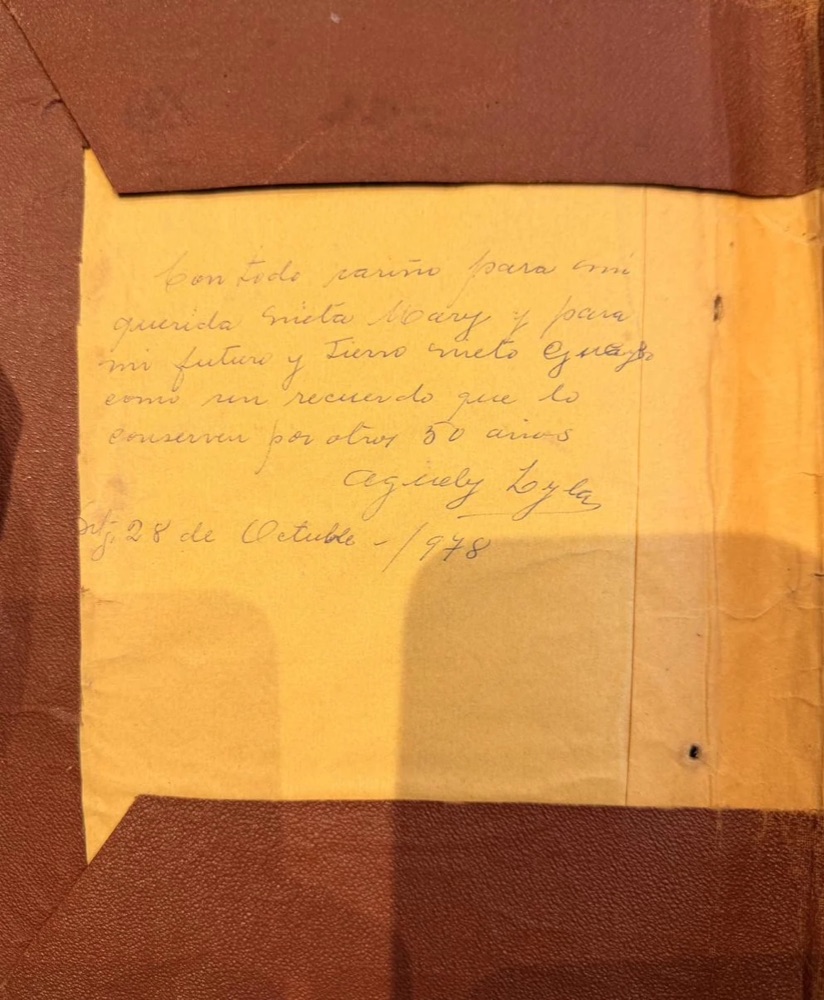
Con todo cariño para mi
querida nieta y para
mi futuro y tierno nieto
como un recuerdo que lo
conserven por otros 50 años
Agüely Lyla
Stgo. 28 de Octubre – 1978
With all my love for my
dear granddaughter and for
my future and tender grandson
as a keepsake, that they
preserve it for another 50 years
Granny Lyla
A reader built for one album
- The story and the leavesThirteen chapters with every photo, transcription and translation in place, plus an index of all 37 leaves.
- ContextA timeline of the dated leaves, the people who wrote in it, and the open questions.
- Made for old handwritingSpanish or English in one tap, a magnifier on every photo, and it remembers where you stopped.
An answer, in the wrong language
The book closes with a poem of mine, written to her.
You came to me as loose pages,
in a language I cannot read,
and for a long while
you had no name.I learned it from a friend of yours
who hid it inside five lines
so that it would keep.You asked for fifty years.
I am early. I am a stranger.
We never met.But the flower is still pressed in the book,
and the forgetting has not come.
Nearly 20 years in IT.
Strategy, leadership, and hands-on with AI.
Set the ground rules before telling the story: evidence beside every claim, and every guess marked for what it is.
Directed Claude as reader, translator, researcher and builder, and made every editorial call across two languages.
Photographed all 37 pages myself, edited the book, and wrote its closing poem.